Circle of Stories
YEAR
2018
STUDIO
PSP Design
STATUS
Completed
TYPE
Architecture
LOCATION
Washington DC
TEAM
1 x Architect
1 x Principal architect
ROLE
Architectural Designer
2D & 3D Illustrator
ABOUT
The National Native American Veterans Memorial Design Competition is sponsored by the Smithsonian’s National Museum of the American Indian (NMAI).
The purpose of the competition is to select a design concept for a new memorial that will be located on the NMAI’s grounds and honor Native American veterans.
The NMAI will establish a National Native American Veterans Memorial to “give all Americans the opportunity to learn of the proud and courageous tradition of service of Native Americans in the Armed Forces of the United States.”
ABOUT
The National Native American Veterans Memorial Design Competition is sponsored by the Smithsonian’s National Museum of the American Indian (NMAI).
The purpose of the competition is to select a design concept for a new memorial that will be located on the NMAI’s grounds and honor Native American veterans.
The NMAI will establish a National Native American Veterans Memorial to “give all Americans the opportunity to learn of the proud and courageous tradition of service of Native Americans in the Armed Forces of the United States.”
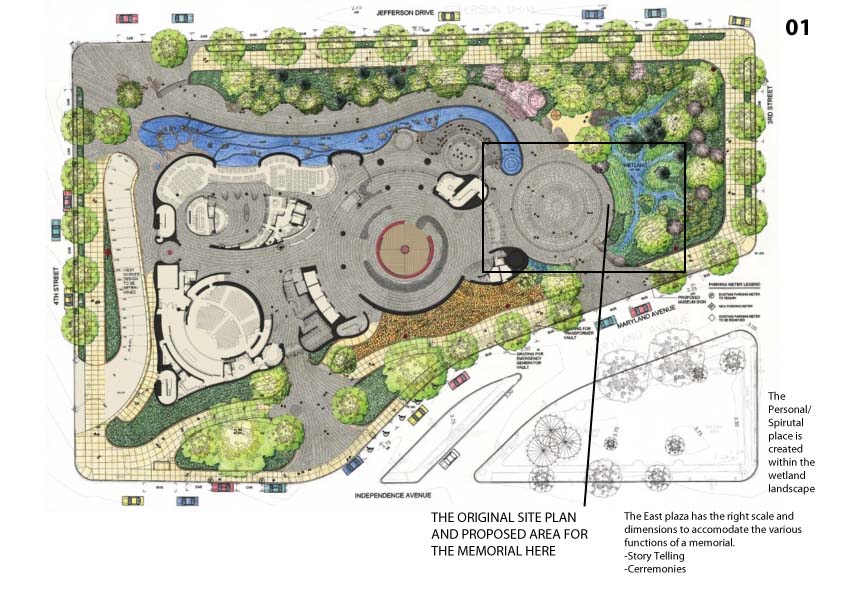
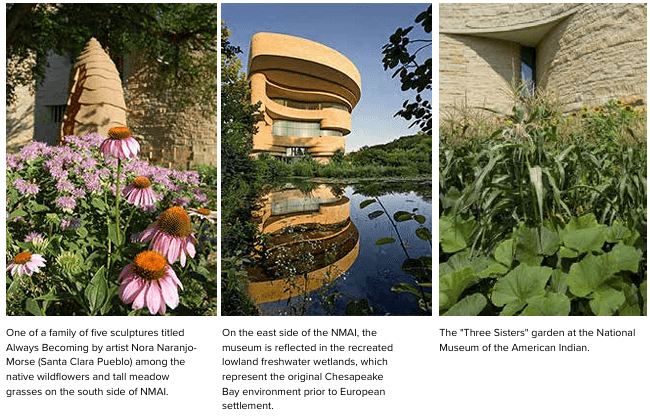
The site for the memorial will be on the grounds of the NMAI. The challenge to competition participants is to select a location on the grounds that enables their proposed memorial to best achieve the vision and design principles while adhering to the project specifications. Many Native veterans that participated in the community consultations identified a preferred location for the memorial along Jefferson Drive due to the relationship to the Mall and reduced traffic noise.
The NMAI's grounds include the building and its surrounding landscape, which is considered an extension of the building and an integral part of the museum as a whole.
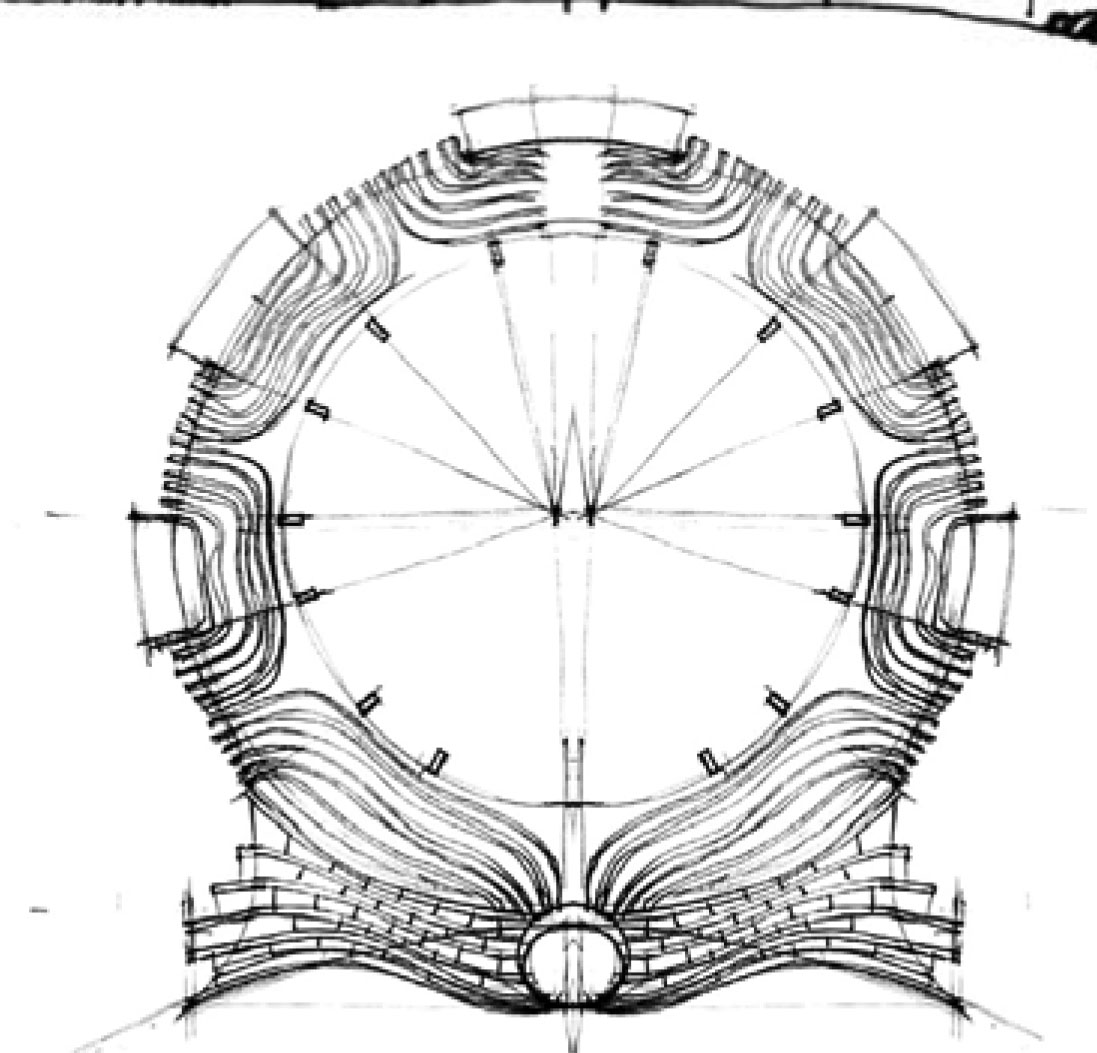
Conceptual diagram of the pavillion
Conceptual diagram of the pavillion
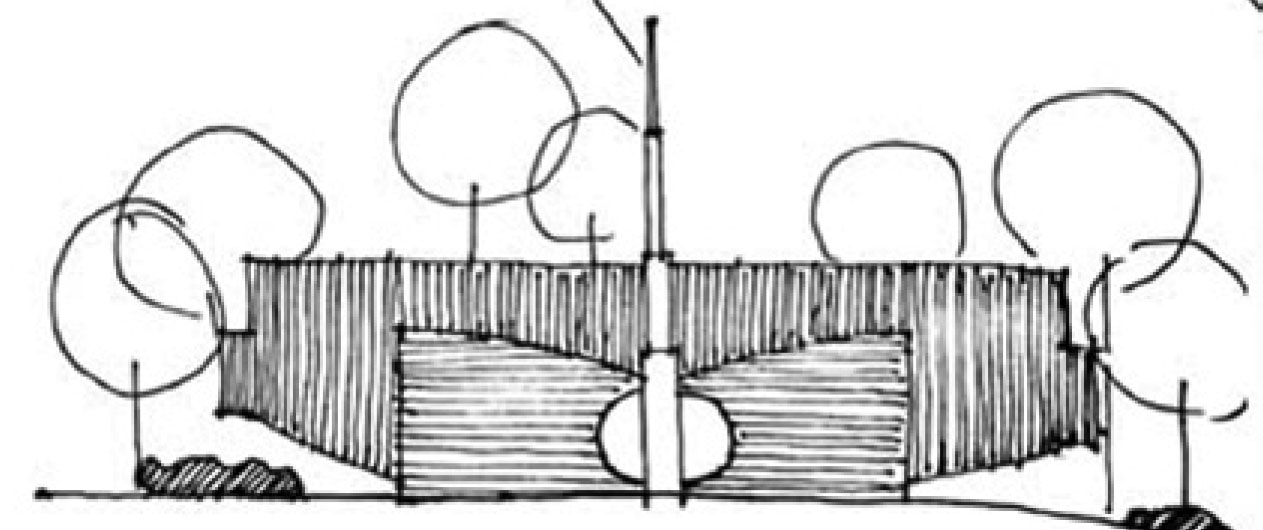
Front view of the pavilion from the "Wall of Remembrance"
Front view of the pavilion from the "Wall of Remembrance"
Front view of the pavilion from the "Wall of Remembrance"
The solution was a thoughtfully structured dashboard that prioritizes usability and data visualization. By implementing clear navigation, interactive charts, and a customizable layout, users can quickly access key metrics and take action efficiently. The design system ensures scalability, allowing LumeX to evolve while maintaining a seamless experience.
Sketches by Ajay Sethi, Associate Architect
The solution was a thoughtfully structured dashboard that prioritizes usability and data visualization. By implementing clear navigation, interactive charts, and a customizable layout, users can quickly access key metrics and take action efficiently. The design system ensures scalability, allowing LumeX to evolve while maintaining a seamless experience.
Sketches by Ajay Sethi, Associate Architect
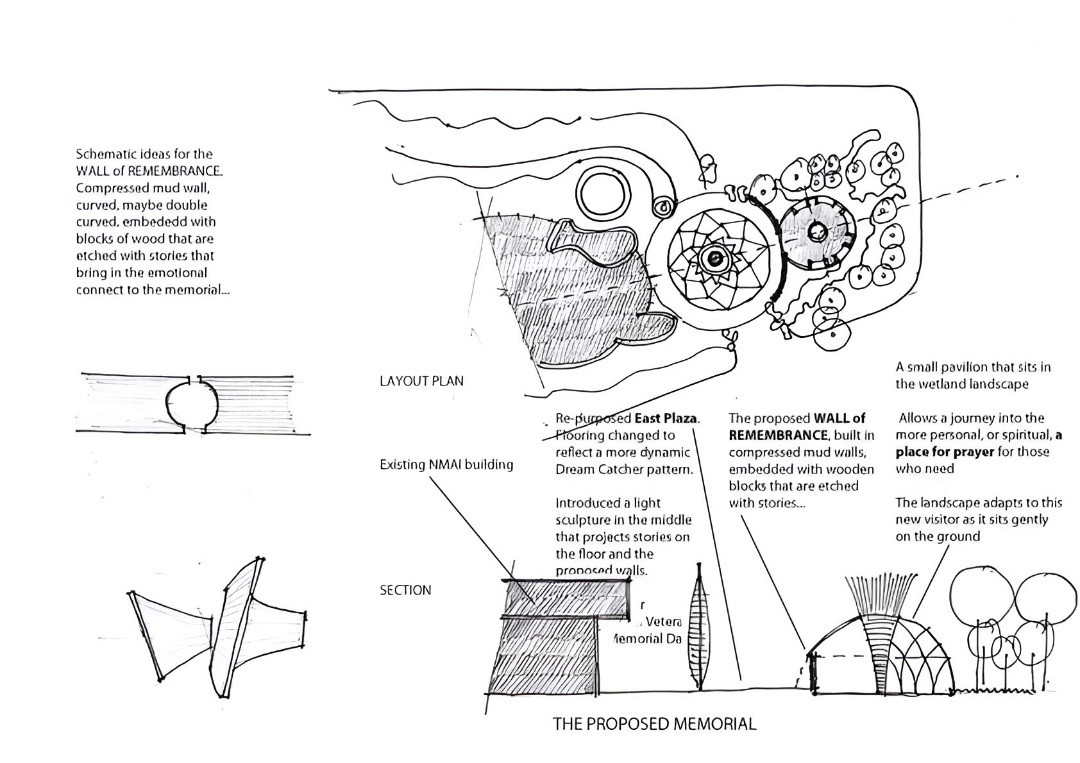
The memorial is designed to tell stories about the warriors in uniform, and to make an emotional and spiritual connect with all who visit. Starting at the West Entry along Jefferson Drive, we weave stories of moving and motivating acts depicted through artworks and vignettes as one moves towards the East Plaza. We felt a meaningful memorial on the grounds of the NMAI was best achieved by re-purposing the East Plaza which has the right dimensions to serve the various functions we set out to accommodate.
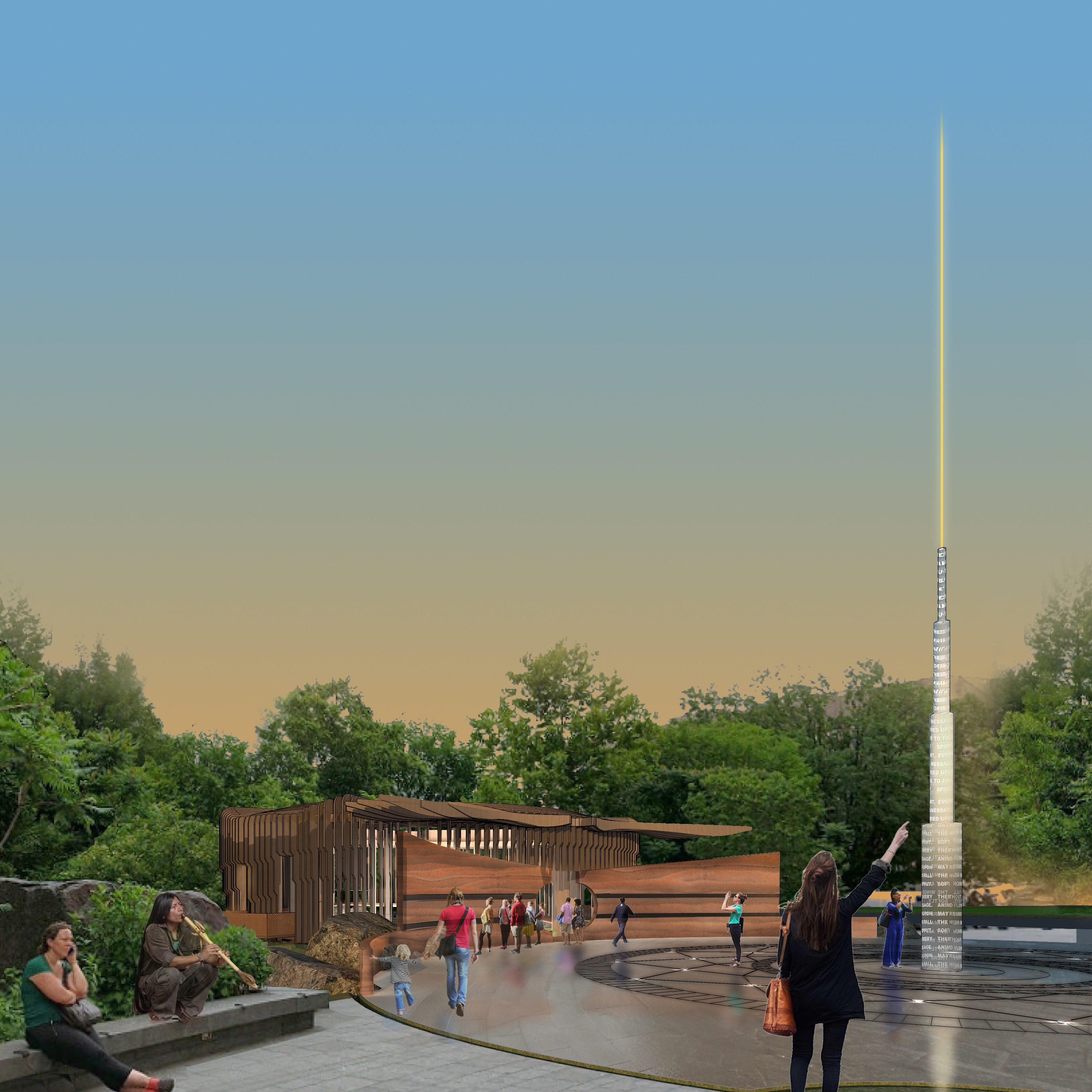
The re-purposed plaza and a proposed Wall of Remembrance become a place to tell and read stories. The centre of the Plaza is imagined with a tall light sculpture that projects stories on the surrounding floor and walls. The Plaza also becomes a place for ceremonies on Veterans and Memorial Day when more people gather to pay their respects.
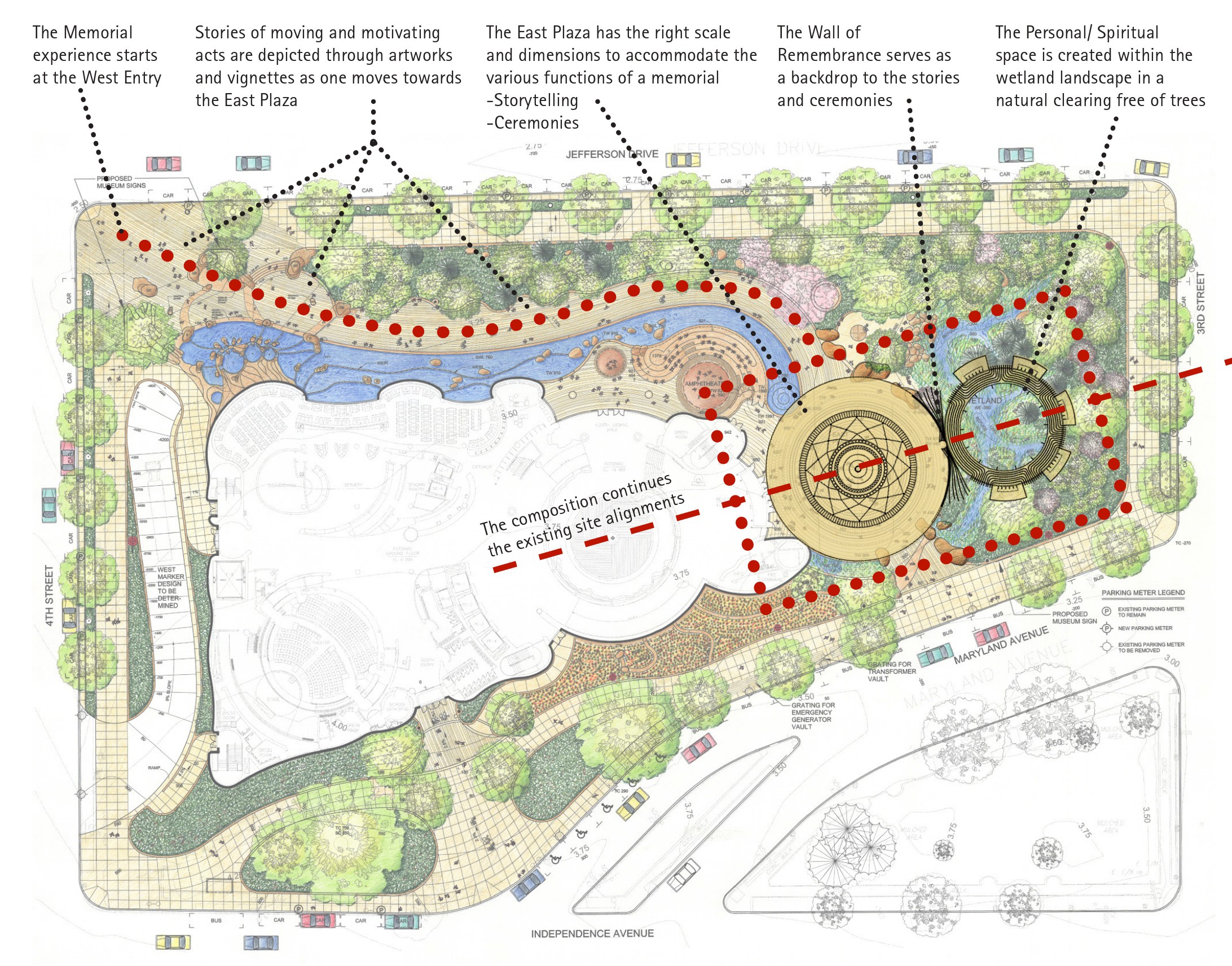
Lastly, to move from the public domain into the more personal or spiritual, a place for prayer for those who need, we propose a small pavilion that sits in the wetland landscape and allows one to journey into a personal space with small private nooks overlooking the wetlands. The landscape is undisturbed and adapts to this new visitor as it sits gently on the ground. The roof of the structure spreads its wings over the plaza in a protective embrace.
The whole experience is designed to promote immersion, reflection and closure, all in harmony with the building and landscape of the Museum.
Lastly, to move from the public domain into the more personal or spiritual, a place for prayer for those who need, we propose a small pavilion that sits in the wetland landscape and allows one to journey into a personal space with small private nooks overlooking the wetlands. The landscape is undisturbed and adapts to this new visitor as it sits gently on the ground. The roof of the structure spreads its wings over the plaza in a protective embrace.
The whole experience is designed to promote immersion, reflection and closure, all in harmony with the building and landscape of the Museum.
ZONE 1
ZONE 1
ZONE 2
ZONE 2
ZONE 3
ZONE 3
ZONE 1
The East Plaza
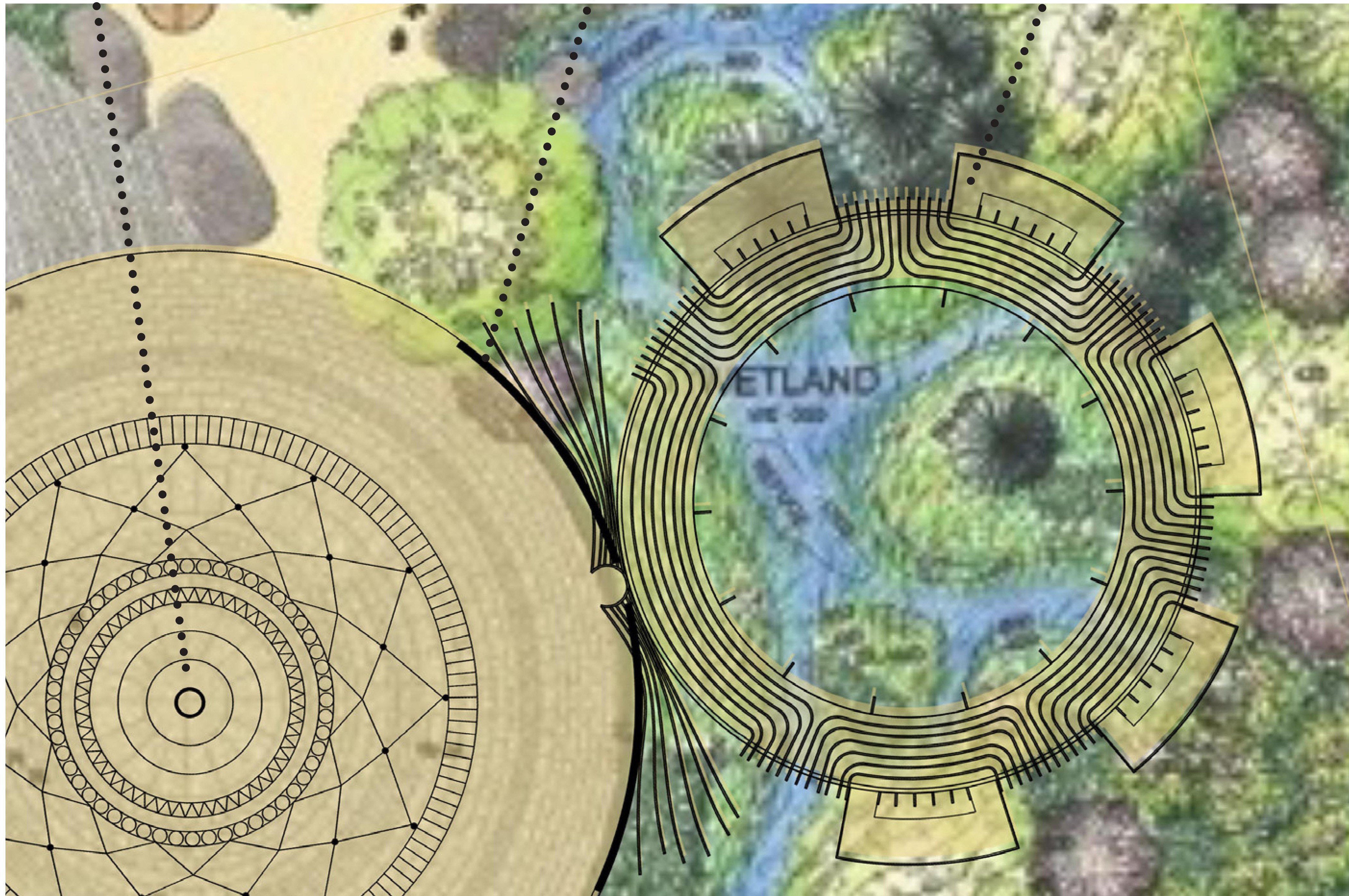
The flooring design reflects a dynamic Dreamcatcher pattern. A symbolic gesture that adds a second layer of meaning to the current pattern of rings and orbs.
The Tower of Stories (a commissioned artwork), projects stories on the floor and the proposed wall.
ZONE 1
The East Plaza
The flooring design reflects a dynamic Dreamcatcher pattern. A symbolic gesture that adds a second layer of meaning to the current pattern of rings and orbs.
The Tower of Stories (a commissioned artwork), projects stories on the floor and the proposed wall.
ZONE 1
The East Plaza
The flooring design reflects a dynamic Dreamcatcher pattern. A symbolic gesture that adds a second layer of meaning to the current pattern of rings and orbs.
The Tower of Stories (a commissioned artwork), projects stories on the floor and the proposed wall.
ZONE 2
The Wall of Remembrance
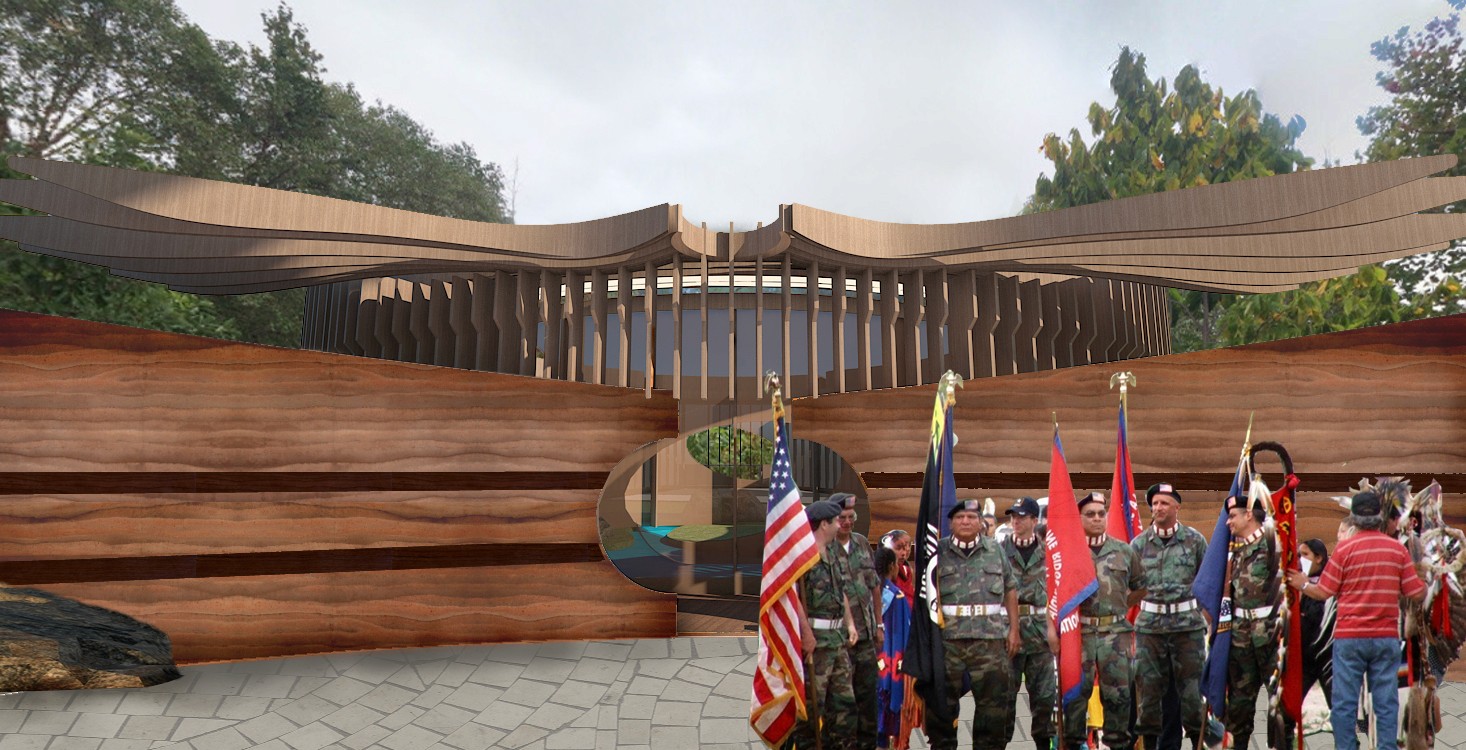
The wall serves as a backdrop for ceremonies on Veterans Day and Memorial Day.
It is built in rammed earth and embedded with wooden blocks that are etched with stories of courage and valour that help create an emotional connect.
ZONE 2
The Wall of Remembrance
The wall serves as a backdrop for ceremonies on Veterans Day and Memorial Day.
It is built in rammed earth and embedded with wooden blocks that are etched with stories of courage and valour that help create an emotional connect.
ZONE 3
The Circle of Stories
The transition into the ring structure allows a journey to the more personal or spiritual, a place for prayer for those who need.
The roof of the structure further enhances the effect of the spread-out wings of an eagle, offering protection to all who come here.
ZONE 3
The Circle of Stories
The transition into the ring structure allows a journey to the more personal or spiritual, a place for prayer for those who need.
The roof of the structure further enhances the effect of the spread-out wings of an eagle, offering protection to all who come here.
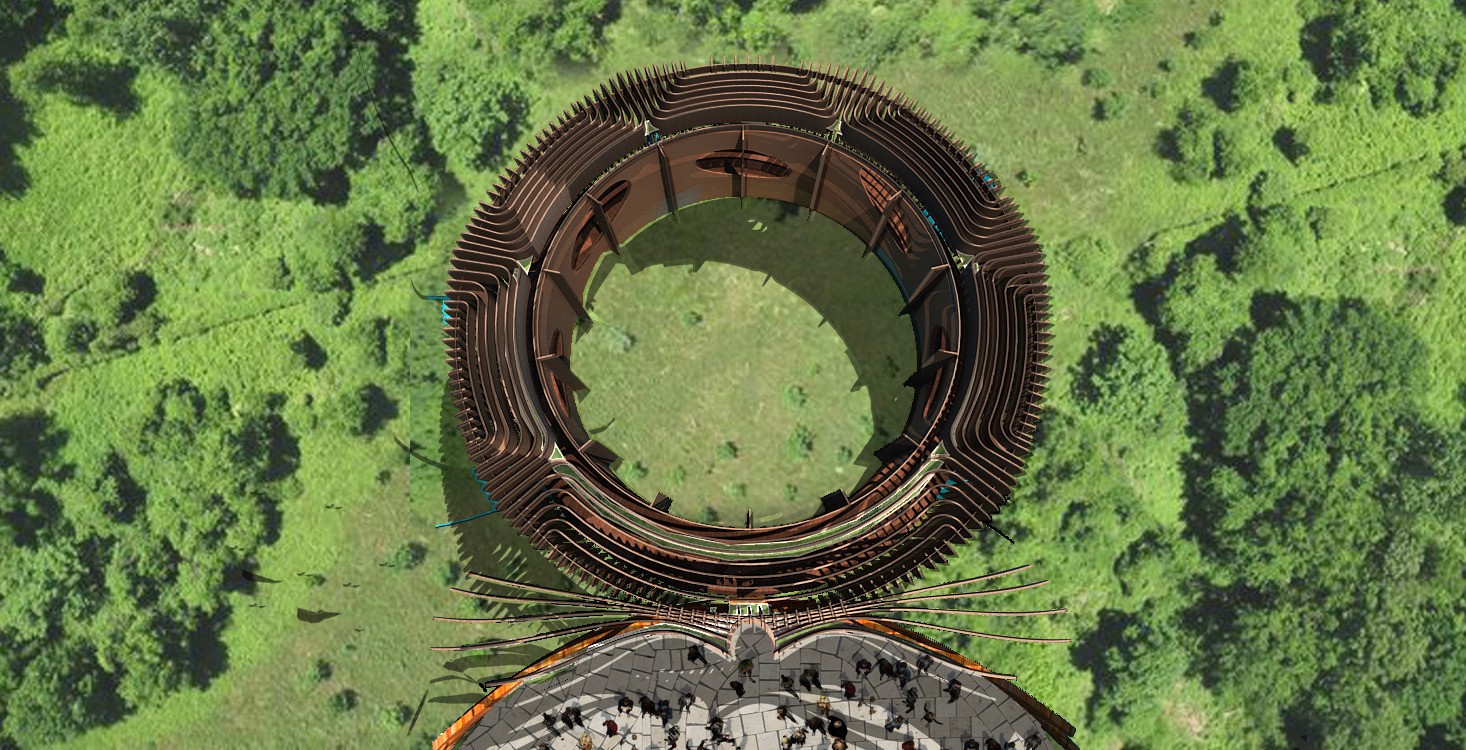
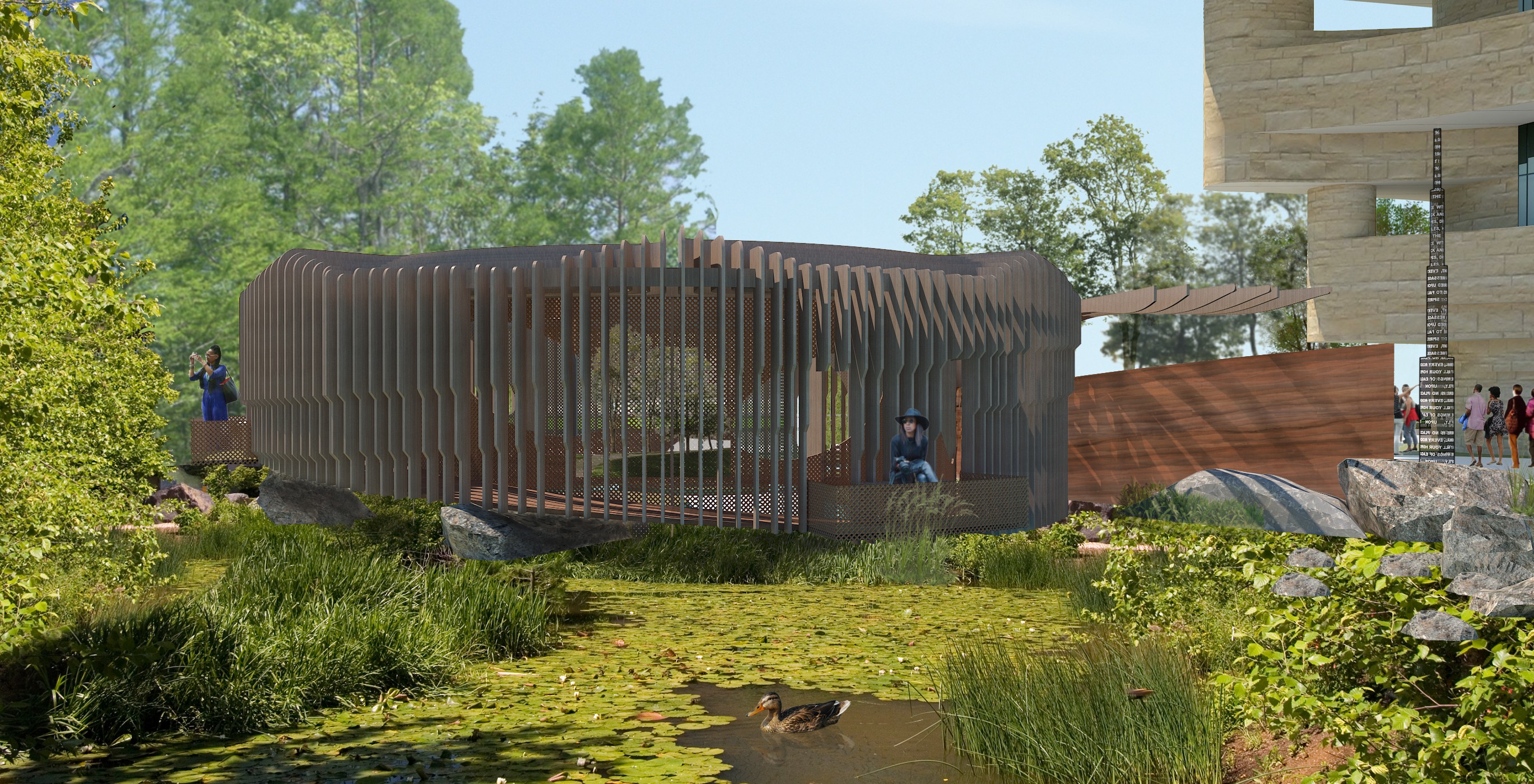
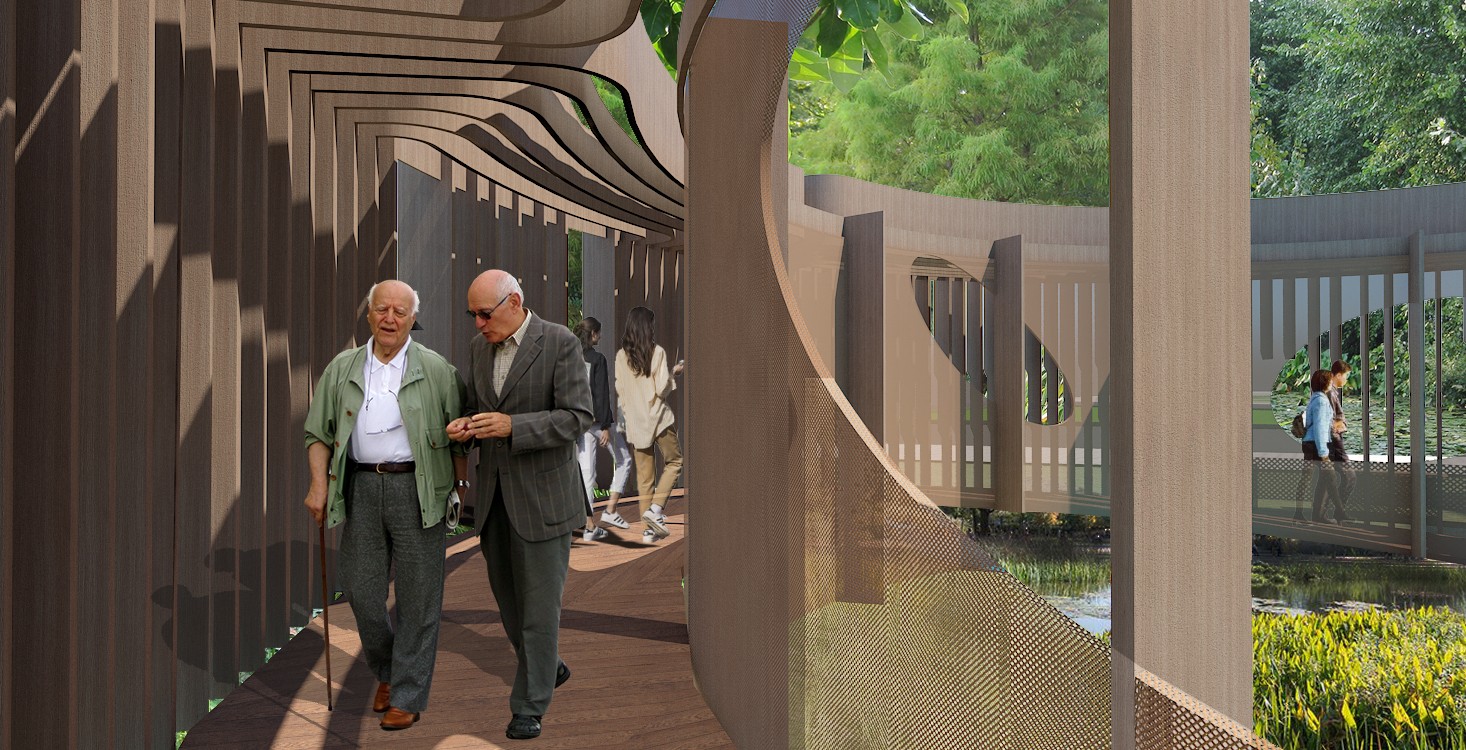
The ring structure sits lightly on the wetland landscape, and it is imagined as an elevated ring with the water gently flowing beneath it. Rocks introduced in the landscape can serve as the base support for this ring.
The roof of the structure further enhances the effect of the spread out wings of an eagle, offering protection to all who come here.
The inner surface is stretched with a woven mesh inspired by the basket weaving tradition and it allows selective views into the landscape.
ZONE 1
The East Plaza
The flooring design reflects a dynamic Dreamcatcher pattern. A symbolic gesture that adds a second layer of meaning to the current pattern of rings and orbs.
The Tower of Stories (a commissioned artwork), projects stories on the floor and the proposed wall.